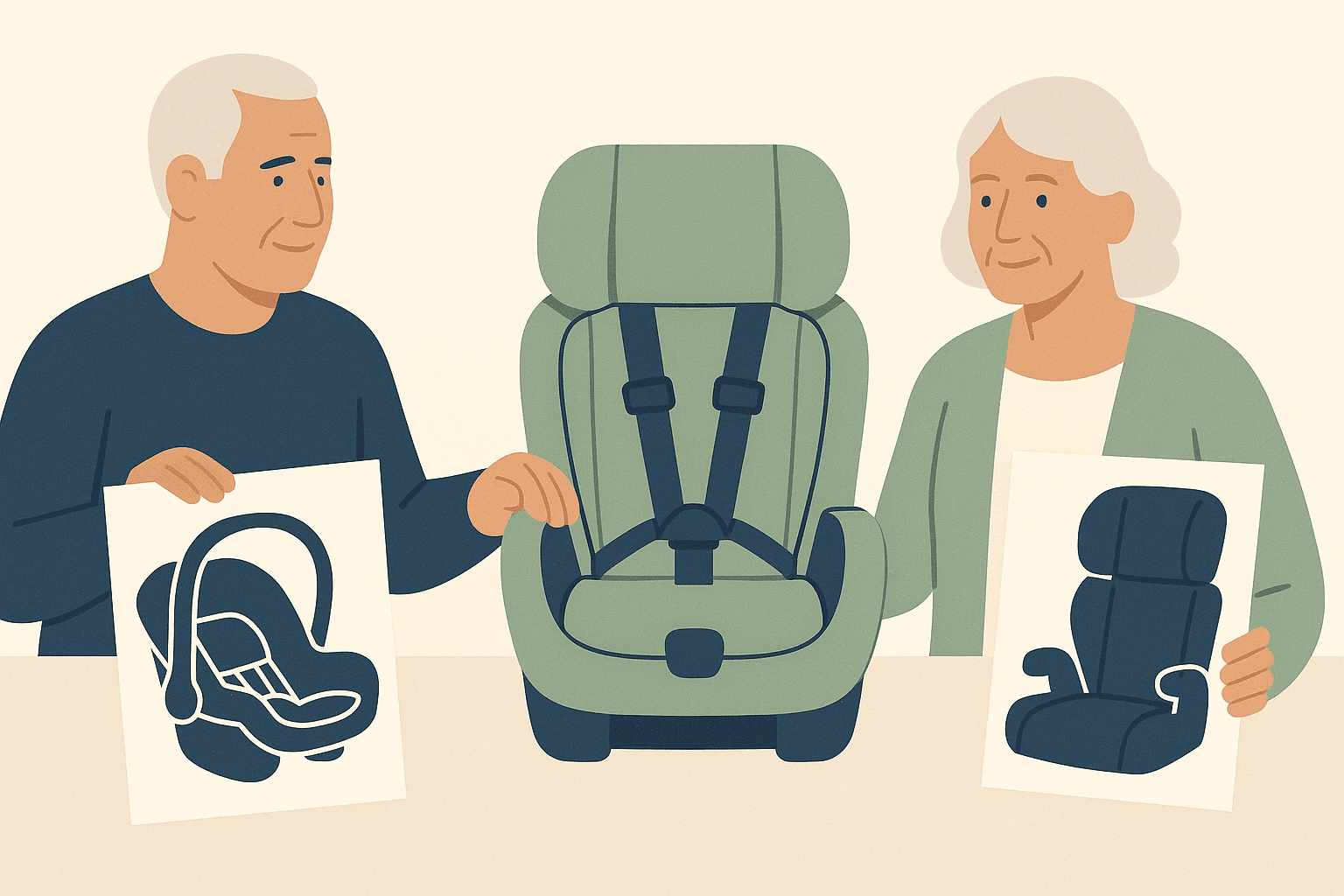
Choosing a car seat can feel like a big decision — it doesn't have to be overwhelming (learn more about education funding strategies: complete guide to paying for private school and college). For newborns, the Chicco KeyFit 35 and Nuna PIPA stand out for easy installation and secure fit. For toddlers needing long-term rear- and forward-facing protection, the Britax Boulevard and Clek Foonf lead the convertible category. For growing kids ready to graduate, the Evenflo Gold and Britax One4Life offer trusted booster (learn more about fafsa guide: how to complete the free application for federal student aid) and all-in-one options. Every seat below meets Federal Motor Vehicle Safety Standards (FMVSS 213); the right pick depends on your child's age and weight and your vehicle's fit (learn more about 529 plan basics: everything parents need to know) (learn more about how to calculate your college savings goal) (learn more about how to appeal financial aid awards: complete guide) (learn more about social-emotional learning in early childhood: a parent's guide), covered below.
Chicco KeyFit 35
The Chicco KeyFit 35 is a favorite among hospitals and parents for its genuinely simple installation — a level indicator and push-button LATCH tightener make it easy to get a secure, correct fit even for first-timers. It fits infants from 4 to 35 pounds, giving families more runway before sizing up.
It includes a five-point harness with a front adjuster and a removable infant insert. Watch-outs: the canopy is smaller than some competitors, and the base isn't compatible with every stroller frame without an adapter.
Best for: first-time parents who want a straightforward, no-fuss install.
Graco SnugRide 35
The Graco SnugRide 35 is a budget-friendly infant seat with real safety substance: an adjustable base with level indicator, one-hand harness adjustment, and compatibility with a wide range of Graco strollers for a true click-in travel system.
Its lighter carrier weight is a plus for daily in-and-out use. Watch-outs: the recline range is more limited than premium competitors, so check your back seat angle, and always follow the manufacturer's base-install instructions.
Best for: families wanting a reliable infant seat that pairs easily with a Graco travel system.
Nuna PIPA
The Nuna PIPA line appeals to parents who want premium build quality in a compact footprint. It features a steel frame, aerospace-grade foam for side-impact protection, and a no-rethread harness that grows with your baby.
Models with a load leg add stability by anchoring to the vehicle floor. Watch-outs: the shell runs smaller than some competitors, so larger newborns may size out sooner, and the price is higher than entry-level options.
Best for: parents prioritizing premium materials and a compact, travel-friendly design.
UPPAbaby MESA
The UPPAbaby MESA pairs seamlessly with UPPAbaby strollers and is built with a steel frame and multi-layer foam for impact protection. The recline and canopy are generously sized, and fabric typically removes for washing without uninstalling the harness.
The MESA base includes a load leg for added stability. Watch-outs: it's heavier than many infant carriers, noticeable during frequent transfers, and it's a higher-investment option.
Best for: families already invested in the UPPAbaby stroller ecosystem.
Britax Boulevard
The Britax Boulevard is a convertible seat built for the long haul — rear-facing from infancy through toddlerhood, then forward-facing as your child grows. It includes Britax's SafeCell impact protection and a steel frame, with an anti-rebound bar on some versions.
The harness adjusts without rethreading, and multiple recline positions keep rear-facing comfortable longer, which pediatric safety experts recommend. Watch-outs: it's bulkier than many convertibles, so measure your back seat, especially for three-across seating.
Best for: parents who want to keep a child rear-facing as long as possible in a well-cushioned seat.
Clek Foonf
The Clek Foonf is a compact, rear-facing-friendly convertible known for its narrow width, a strong pick for three-across installs. Built with a steel and aluminum frame, it offers rigid LATCH installation that many parents find faster and more foolproof than belt-only installs.
The Foonf supports extended rear-facing to higher weight limits than many competitors. Watch-outs: it's premium-priced, and the firmer, structured design means less plush padding than cushier competitors.
Best for: families needing a narrow seat for tight back seats or multiple seats side by side.
Britax One4Life
The Britax One4Life is an all-in-one seat spanning nearly every stage — rear-facing harness, forward-facing harness, high-back booster, and backless booster — in a single seat, a meaningful value over the years.
It includes Britax's SafeCell technology and a no-rethread harness. Watch-outs: all-in-ones run larger and heavier than stage-specific seats, so always confirm current height/weight limits for each mode before switching configurations.
Best for: parents who want one seat to last from toddlerhood through the booster years.
Graco 4Ever DLX
The Graco 4Ever DLX converts from a forward-facing harness seat to a high-back booster and then a backless booster as your child grows — a widely available, mid-range option many families choose for its balance of features and cost.
It includes an adjustable headrest and harness that grow with your child, plus cup holders for longer drives. Watch-outs: like other all-in-ones, it's bulkier in its earliest configuration, so check your vehicle fit.
Best for: budget-conscious families wanting one seat to cover multiple growth stages.
Evenflo Gold
Evenflo's Gold-tier boosters suit kids who've outgrown a harnessed seat but still need the seatbelt positioned correctly across hips and chest, not neck and stomach. Look for models with side-impact tested foam and a growing, adjustable headrest.
Boosters are a critical, often-overlooked stage; kids should stay in one until they pass the seatbelt fit test (typically around 4'9" and 8–12 years old, per NHTSA guidance), not just when they feel "too old" for one. Watch-outs: confirm the specific model's height and weight range, as it varies by version.
Best for: kids transitioning out of a harnessed seat who still need help getting a proper seatbelt fit.
Car Seat Safety Basics for 2026
A few fundamentals apply no matter which seat you choose:
- Rear-face as long as possible. Follow your seat's manufacturer height and weight limits rather than switching to forward-facing at an arbitrary age — NHTSA and the American Academy of Pediatrics both recommend keeping children rear-facing as long as the seat allows.
- Check the expiration date. Car seats have a manufacturer-set expiration (usually on a sticker or molded into the plastic), typically 6–10 years from manufacture, since materials degrade over time.
- Register your seat for recalls. Fill out the registration card or register online so you're notified directly if a recall is issued.
- Follow NHTSA and manufacturer limits exactly. Every seat's rear-facing, forward-facing, and booster limits are specific to that model — check the manual, not just general guidelines.
- Get your installation checked. Many fire departments and certified Child Passenger Safety Technicians offer free seat-check services.
How to Choose the Right Car Seat
- Child's age, weight, and height — match against each seat's specific stage limits, not just its general "type."
- Vehicle fit — measure your back seat and consider width if fitting multiple seats side by side.
- Install type — decide whether you'll primarily use LATCH (Lower Anchors and Tethers for Children) or a seatbelt install, and confirm compatibility.
- Budget — infant, convertible, and all-in-one seats vary widely in price; weigh upfront cost against how many stages you'll need to cover.
- Longevity — an all-in-one seat costs more upfront but can replace two or three separate purchases as your child grows.
Frequently Asked Questions
When should I switch my child from rear-facing to forward-facing?
Follow the height and weight limits printed on your car seat, not a set age. NHTSA and pediatric safety guidance recommend keeping kids rear-facing as long as the seat allows.
How do I know if my car seat is installed correctly?
The seat shouldn't move more than an inch side-to-side or front-to-back at the belt path. A certified Child Passenger Safety Technician — often available through local fire departments or hospitals — can check your install for free.
Can I use a car seat past its expiration date?
No. Expiration dates account for material degradation over time. Check the sticker or molded date on your seat and replace it once expired, even if it looks fine.
When can my child move to a regular seatbelt without a booster?
Per NHTSA guidance, most kids are ready once they pass the seatbelt fit test — typically around 4'9" and 8 to 12 years old — with the lap belt low on the hips and shoulder belt crossing the chest, not the neck.
Whichever seat you choose, the most important step is simple: register it, install it carefully, and check the fit as your child grows. You don't need the fanciest seat on this list — you need the one that fits your child, your car, and your budget, installed correctly. That's what keeps kids safe on every drive.