
Standardized Testing Strategy: SAT vs. ACT Complete Guide
SAT vs. ACT: A Comprehensive Guide for High School Students Choosing between the SAT and ACT is a pivotal decision for high school students planning their path to college. Both tests play a critical...
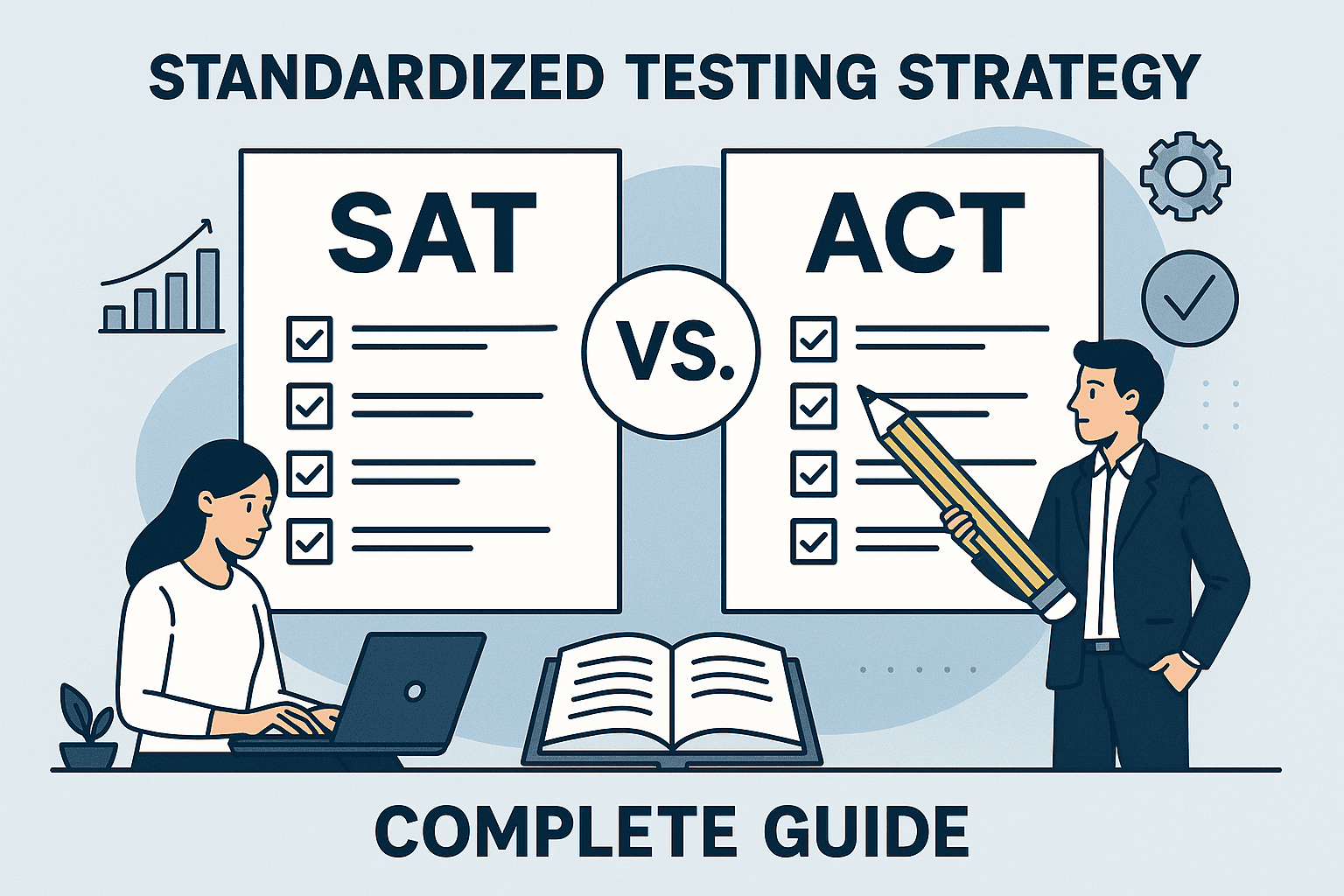
SAT vs. ACT: A Comprehensive Guide for High School Students
Choosing between the SAT and ACT is a pivotal decision for high school students planning their path to college. Both tests play a critical role in college admissions, but they cater to different strengths and preferences. Understanding the nuances of each can empower students to make an informed choice that best aligns with their academic abilities and college goals.
Understanding the SAT
The SAT is a standardized test widely used for college admissions in the United States. It assesses a student's readiness for college through three core sections: Reading, Writing and Language, and Math.
Key Features of the SAT:
- Content Focus: The SAT emphasizes critical reading and math skills, including algebra, problem-solving, and data analysis.
- Scoring: The SAT score ranges from 400 to 1600, combined from the Math section (200-800) and the Evidence-Based Reading and Writing section (200-800).
- Test Length and Structure: The SAT is 3 hours long, with an additional 50 minutes for the optional essay. It consists of multiple-choice questions and a no-calculator math section.
- Cost: As of the latest update, the SAT costs $55 without the essay.
SAT: Did You Know?
The SAT has undergone several revisions, the most recent in 2016, to better align with high school curricula and college readiness standards. This change aimed to make the test more relevant and fair for a broader range of students.
Understanding the ACT
The ACT is another prevalent standardized test for college admissions, assessing students' academic readiness across four areas: English, Math, Reading, and Science.
Key Features of the ACT:
- Content Focus: The ACT covers English, math, reading, and science reasoning, offering a broader assessment range, including advanced math concepts and scientific data analysis.
- Scoring: The ACT score ranges from 1 to 36, with the composite score being the average of the four test sections.
- Test Length and Structure: The ACT takes 2 hours and 55 minutes, with an additional 40 minutes for the optional essay. It features multiple-choice questions across all sections.
- Cost: The ACT costs $60 without the writing section.
ACT: Did You Know?
The ACT includes a Science section, unique among standardized college entrance exams. This section doesn't test specific science knowledge but rather the ability to interpret and analyze scientific data, making it a critical thinking test as much as a content assessment.
Choosing Between SAT and ACT
Deciding which test to take should be based on personal strengths, college requirements, and test-taking preferences. Here's a comparative overview to help guide your decision:
SAT Strengths:
- Emphasizes Evidence-Based Reading: Ideal for students with strong reading and analytical skills.
- Math Section Divided: With one calculator and one no-calculator section, it tests more theoretical understanding.
- Focused Content: More straightforward question formats, focusing on fewer topics in greater depth.
ACT Strengths:
- Science Reasoning Section: Benefits students with strong analytical skills in interpreting scientific data.
- Straightforward Questions: Generally more direct than SAT questions, which might appeal to some students.
- Pace: The ACT offers more questions in less time, which can benefit quick readers and test-takers.
Preparing for the SAT and ACT
Regardless of which test you choose, preparation is key. Here are some strategies to consider:
- Take Practice Tests: Both the College Board and ACT offer free practice tests. These can help you familiarize yourself with the format and identify areas for improvement.
- Review Fundamentals: Ensure you have a strong grasp of the core academic skills tested, including advanced math concepts for the ACT.
- Develop a Study Plan: Dedicate regular study time, focusing on your weaker areas. Consider using prep books, online resources, or tutoring if needed.
- Practice Time Management: Both tests require efficient time management. Practice completing sections within the allotted time to improve your pace.
Surprising Insight:
The choice between SAT and ACT might also be influenced by regional preferences. Historically, the SAT dominated the coasts, while the Midwest preferred the ACT. However, this divide is lessening as more colleges nationwide accept both tests equally.
Micro-Fact:
The ACT was introduced in 1959 as a competitor to the SAT, aiming to assess students' overall educational development and college readiness differently. This competition has led to continuous improvements in both tests to better serve students' needs.
Closing Analogy:
Choosing between the SAT and ACT is like selecting the right tool for a job. Just as a hammer and a screwdriver serve different purposes, each test caters to different strengths and preferences. By understanding your own academic abilities and test-taking styles, you can pick the tool that best fits your journey to college admission.
Conclusion
The SAT and ACT are both pathways to college admission, each with unique features that cater to different student strengths. By understanding the distinctions between the two, students can make an informed decision that aligns with their academic abilities and college aspirations. Remember, the best test for you is the one on which you'll perform your strongest. Happy testing!
Parenting & Family Guide Library
- How Much Does It Cost to Raise a Child in America? The Complete 2026 Guide
- How Parent PLUS Loans Work: The Complete 2026 Guide for Parents (New Limits, Rates, and Repayment)
- How to Choose a College: The Complete Guide for Parents (2026)
- How to Fill Out the FAFSA: The Complete Step-by-Step Guide for Parents (2026–27)
- How to Save for College: The Complete Parent's Guide (2026)
- What Is a 529 Plan and How Does It Work? The Complete Parent's Guide
- What Is a Custodial Roth IRA? How It Works, Rules, Contribution Limits, and How to Open One (2026 Guide)
- 529 College Savings Plans: Complete Guide to Tax-Advantaged Education Funding
- 529 Plan Basics: Everything Parents Need to Know
- 529 Plan Contribution Limits and Rules: Complete Guide
- 529 Plan Rule Changes for 2026: 7 Updates Parents Should Know
- 529 Plan Tax Benefits: Complete Guide to Tax Advantages
- 529 Plan vs. Coverdell ESA vs. UTMA: Complete Comparison
- 529 Plans and College Savings Options 2026: 6 Ways to Save Ranked by Tax Advantage
- 6 Education Tax Credits and Deductions Every Parent Should Claim in 2026
- 7 Best 529 Plans of 2026, Ranked
- 7 Best Coding Programs for Kids in 2026 (Ranked by Age & Learning Style)
- 7 Best College Prep Programs for High Schoolers in 2026: Ranked by Results and Value
- 7 Child Tax Credit Changes Families Need to Know for 2026
- 7 Types of Summer Camps for Kids in 2026: How to Find the Right Program
- 8 Best Mental Health Apps for Teens in 2026 (Reviewed)
- 8 Best Summer Camps for Kids in 2026 (Ranked by Category, Cost & Age Range)
- 8 Best Tutoring Services for Kids in 2026 (Online & In-Person, Ranked)
- Back-to-School Budget 2026: 9 Strategies to Cut Costs Without Cutting Corners
- Best 529 Plan Providers of 2026 (Compared by Fees & Investment Options)
- Best 529 Plans by State in 2026: Top 8 Ranked for In-State and Out-of-State Savers
- Best 529 Plans for Grandparents in 2026: 7 Options Compared
- Best ABA Therapy Providers of 2026: 7 National Options for Autism Care
- Best ADHD Apps and Tools for Kids of 2026
- Best Au Pair Agencies of 2026: Top 7 Compared
- Best Baby Formula Brands of 2026: Top 7 Compared by Type
- Best Baby Monitors 2026: Top Picks for Video, WiFi, and Breathing Tracking
- Best Baby Products of 2026: Safety and Value for Newborns (Ranked by Pediatric Standards)
- Best Baby Registries of 2026: 7 Options for New Parents Compared
- Best Back-to-School Backpacks for 2026
- Best Back-to-School Deals of 2026: Where Families Save the Most (By Category)
- Best Back-to-School Laptops for Kids 2026: 7 Picks by Age and Budget
- Best Breast Pumps of 2026: Wearable, Insurance-Covered, and Hospital-Grade Picks
- Best Budgeting Apps for College Students in 2026: 7 Tested and Ranked
- Best Car Seats 2026: Top Picks for Infants, Convertibles, and Boosters
- Best Children's Vitamins and Supplements of 2026: Top 7 Picks for Kids
- Best Chore Apps for Kids of 2026: Top 7 Compared
- Best Co-Parenting Apps 2026: 7 Tools Ranked for Custody, Communication, and Expenses
- Best College Laptops for Students in 2026: 7 Picks Compared
- Best College Savings Apps in 2026: 7 Tools for Building a College Fund
- Best Companies for Parental Leave in 2026: 8 Top Employers Compared
- Best Dorm Essentials for College in 2026: The Complete Move-In Checklist
- Best Educational Toys for Toddlers in 2026: 8 Picks Ranked by Skill Built
- Best Extracurricular Activities for College Applications: 8 That Actually Impress Admissions
- Best Family Budget Apps 2026: 7 Tools That Keep the Whole Household Aligned
- Best Family Cell Phone Plans in 2026: 8 Options Compared
- Best Family Meal Planning Apps of 2026: Top 7 for Busy Parents
- Best Family Travel Credit Cards of 2026: Top 7 for Vacations and Rewards
- Best Health Insurance Plans for Families in 2026 (Ranked by Coverage & Cost)
- Best Homeschool Curriculum of 2026: Top Programs by Grade, Style, and Budget
- Best Kids Savings Accounts of 2026: 7 Top Picks for Families
- Best Kids Smartwatches in 2026: 7 Top Picks for Safety and GPS
- Best Life Insurance for Children of 2026 (7 Policy Types Compared)
- Best Life Insurance for Parents in 2026
- Best Nanny Apps and Platforms of 2026 (Ranked for Parents)
- Best Online High School Programs in 2026: 8 Accredited Options Ranked
- Best Online Math Tutoring Services of 2026: 7 Options Compared
- Best Online Tutoring Services for Kids in 2026: 7 Top Platforms Compared
- Best Parental Control Apps of 2026: Top 7 to Keep Kids Safe Online
- Best Pediatric Telehealth Services of 2026: 7 Options for Parents
- Best Private Student Loans for Graduate School in 2026
- Best Private Student Loans for Parents of 2026: Top 7 Compared
- Best Private Student Loans With No Cosigner in 2026: Top 7 Lenders
- Best SAT and ACT Prep Courses in 2026: 8 Top Options Compared
- Best Savings Accounts for Kids in 2026: 8 Options Ranked for Parents
- Best Scholarship Search Websites of 2026: 8 Free Tools Compared
- Best Strollers of 2026: Top Picks for Every Family & Budget
- Best Student Checking Accounts for 2026
- Best Student Loan Refinancing for Parents in 2026: 7 Top Lenders Compared
- Best Summer Activities for Kids 2026: 50 Ideas by Age Group
- Best Summer Learning Programs to Prevent Learning Loss in 2026
- Best Teen Banking Apps in 2026: Greenlight vs Step vs Current and More Compared
- Best Term Life Insurance for Parents in 2026: Ranked by Rate, Speed & Coverage
- Best Youth Sports Programs in 2026: 8 Top Options for Kids Compared
- Building a Strong Extracurricular Profile
- Building Academic Foundations in Middle School
- Building Resilience in Young Children: Strategies for Parents
- Child Tax Credit 2026: Rules, Income Limits, and How Much You Can Get
- Childcare Costs by State 2026: What Parents Actually Pay for Daycare, Pre-K, and Nannies
- College Admissions Consulting vs. DIY: Complete Comparison
- College Essays for Elite Schools: Complete Guide to Standout Applications
- College Scholarship Search: The 7-Source System That Finds Awards Others Miss
- CSS Profile Guide: Complete Guide to College Board Financial Aid Form
- Early Childhood Development: Building Foundations for Future Success
- Early Decision vs. Early Action vs. Regular Decision: Complete Guide
- Early Decision vs. Early Action: Which is Right for Your Child?
- Early Math Skills: How to Introduce Numbers and Counting
- Education Funding Strategies: Complete Guide to Paying for Private School and College
- Elite College Admissions: Complete Guide to Ivy League and Top-Tier Schools
- Extracurricular Activities for College: Complete Guide to Building a Strong Profile
- Extracurricular Activities for Middle Schoolers
- FAFSA Changes 2026: 7 Key Updates Every Family Needs to Know Before Filing
- FAFSA Guide: How to Complete the Free Application for Federal Student Aid
- Financial Aid for College: Complete Guide to Maximizing Aid
- Freshman Year of High School: Complete Guide to College Preparation
- GPA Optimization Strategies for College Admissions
- Guardianship Planning: Complete Guide to Choosing Guardians for Your Children
- High School Course Selection: Complete Guide to Building a Strong Transcript
- Homeschool Curriculum Comparison 2026: 9 Programs Ranked by Strength and Cost
- How Much Life Insurance Do Parents Need? Complete Calculator Guide
- How Student Loans Work: What Every Family Needs to Know
- How to Appeal Financial Aid Awards: Complete Guide
- How to Calculate Your College Savings Goal
- How to Choose the Right College Admissions Consultant
- How to Open a 529 Plan: Step-by-Step Guide
- Is College Admissions Consulting Worth the Cost?
- Ivy League Admissions: Complete Guide to Getting Accepted
- Junior Year of High School: Complete Guide to College Application Prep
- Life Insurance for New Parents: Complete Guide to Family Protection
- Life Insurance for Parents: Complete Guide to Family Protection
- Life Insurance for Parents: Protecting Your Family's Future
- Managing Screen Time for Young Children: Evidence-Based Guidelines
- Middle School Academic Planning: Setting the Stage
- Middle School Academic Planning: Setting the Stage for High School Success
- Middle School Course Selection: Setting Up for Success
- Need-Based Aid vs. Merit Scholarships: Complete Guide
- Nutrition for Early Childhood Development: Building Healthy Habits
- Potty Training Success: A Comprehensive Guide for Parents
- Preparing for High School: A Parent's Guide
- Preparing for High School: Complete Guide for 8th Grade Parents
- Private School vs. Public School: Complete Cost and Value Comparison
- SAT vs. ACT: Which Test Should Your Student Take?
- Scholarship Strategies: Complete Guide to Finding and Winning Scholarships
- School Choice Options Explained: 7 Paths for Finding the Right Fit for Your Child
- Senior Year of High School: Complete Guide to College Applications
- Sleep Training and Bedtime Routines for Young Children
- Social Media Safety for Middle School Students
- STEM Activities for Toddlers and Preschoolers
- Study Skills and Time Management for Teens
- Summer Programs and Enrichment Opportunities
- Term Life Insurance vs. Whole Life: Which is Better for Parents?
- The 5 Best Speech Therapy Apps for Kids in 2026
- The 7 Best 529 Plan Alternatives of 2026
- The 7 Best College Admissions Consultants of 2026
- The 7 Best College Textbook Rental Services of 2026
- The 7 Best Custodial Brokerage Accounts for Kids in 2026
- The 7 Best Identity Theft Protection Services for Kids in 2026
- The 8 Best Reading Tutoring Apps for Kids in 2026
- The 9 Best Learning Apps for Kids in 2026 (Tested by Parents)
- The Complete Parenting Styles Guide: Which Approach Is Right for Your Family?
- Time Management Skills for Middle Schoolers: A Parent's Guide
- Toddler Developmental Milestones: What to Expect at Every Age (12–36 Months)
- What to Expect from College Admissions Consulting Services
- Wills for Parents: Complete Guide to Estate Planning with Children
Stay Informed About Retirement Planning
Get expert insights and practical advice delivered to your inbox weekly.
Join 50,000+ seniors making informed retirement decisions.