Private School vs. Public School: Complete Cost and Value Comparison
Private School vs. Public School: A Comprehensive Guide for Parents Deciding between private and public schooling is a pivotal choice many parents face. This decision can significantly influence your...
Private School vs. Public School: A Comprehensive Guide for Parents
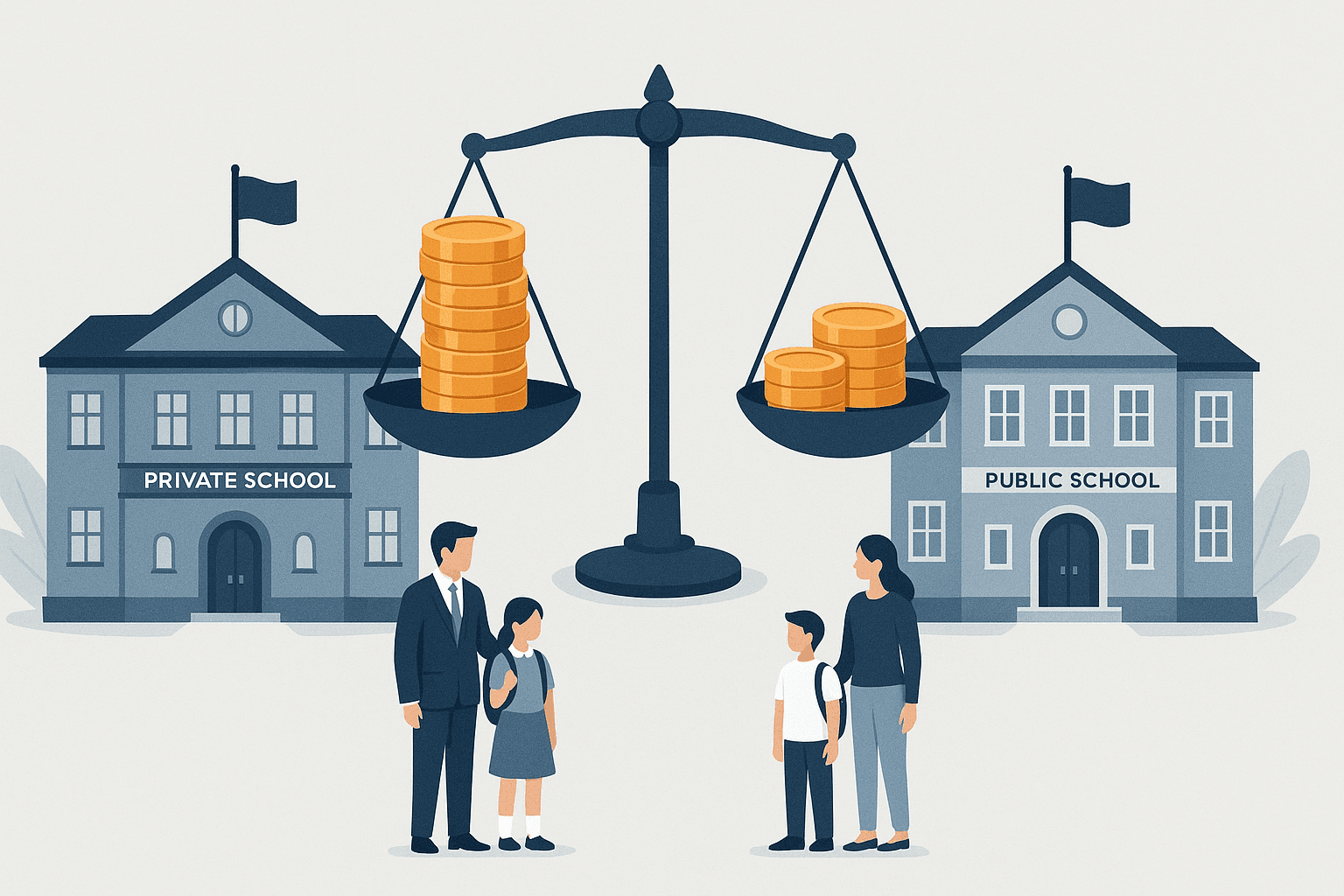
Deciding between private and public schooling is a pivotal choice many parents face. This decision can significantly influence your child's educational journey and overall development. Both private and public schools offer unique advantages, and understanding these can help you make an informed decision that aligns with your family's educational values, financial situation, and long-term goals for your child.
Quick Answers
What is the difference between private school and public school?
Public schools are funded by local, state, and federal tax dollars, are free to attend, must enroll students in their district, and follow state curriculum and testing requirements. Private schools charge tuition, control their own admissions, and set their own curriculum, which gives them more flexibility but no obligation to accept or retain any given student. The practical differences families feel most are cost, class size, admissions selectivity, and how special-education services are delivered.
Are private schools better than public schools?
Not automatically. Raw comparisons of test scores favor private schools, but much of that gap reflects the families who enroll rather than the instruction itself, and research that adjusts for family income and parent education narrows the difference considerably. A well-resourced public school can outperform an average private school, and the reverse is also true. The better question is fit: which specific school serves your child's needs, not which category wins on average.
How much should private school cost?
There is no single answer, because tuition varies enormously by region, grade level, and school type. Day schools cost far less than boarding schools, parochial and religious schools are typically the most affordable private option, and independent college-preparatory schools sit at the top of the range. Budget for more than the tuition line as well, since fees, uniforms, technology, transportation, and activities add up, and ask every school about need-based aid before ruling it out on sticker price.
Understanding the Basics
Public Schools
- Funded by: Government (federal, state, and local funds)
- Tuition: Free education
- Class Size: Generally larger
- Curriculum: State-mandated standards
Private Schools
- Funded by: Tuition fees, donations
- Tuition: Varies widely, can be costly
- Class Size: Generally smaller
- Curriculum: Independent, often with specialized programs
Key Considerations for Parents
1. Educational Philosophy and Curriculum
- Public Schools: Focus on a broad, general curriculum designed to meet state standards. Innovation may be limited by regulations.
- Private Schools: Offer the freedom to design specialized and innovative curriculums, including arts, STEM, and language immersion programs.
2. Class Size and Individual Attention
- Public Schools: Larger class sizes might limit individual student attention.
- Private Schools: Smaller class sizes typically allow for more personalized teaching and learning experiences.
3. Diversity and Inclusivity
- Public Schools: Tend to mirror the community's socioeconomic, racial, and cultural diversity.
- Private Schools: Diversity varies by school; some offer programs to increase inclusivity.
4. Specialized Programs and Extracurricular Activities
- Public Schools: Offer a range of extracurriculars, though resources may vary.
- Private Schools: Often provide extensive extracurricular options and specialized programs not available in public schools.
5. College Preparation and Admissions
- Public Schools: Offer college preparatory courses; however, resources for college counseling vary.
- Private Schools: Typically have robust college counseling services and may have higher rates of admission to competitive colleges.
Financial Considerations
- Public Schools: Cost-free but may have fees for extracurricular activities.
- Private Schools: Tuition varies, with the average cost of private high school in the U.S. around $14,600 per year (National Center for Education Statistics, 2021).
- Scholarships and Financial Aid: Many private schools offer financial aid packages to assist families.
The Impact on Family Life
- Community and Network: Private schools often foster a tight-knit community with involved parents and alumni networks.
- Daily Logistics: Consider the location and transportation options for each school choice.
Making the Decision: Questions to Ask
- What are my child's educational needs and learning style?
- How do the school's values align with our family's values?
- What is the school's track record for college admissions and graduate success?
- Can our family realistically manage the financial commitment of private school?
- What level of parental involvement and community engagement do we seek in a school?
A Closer Look at the Data
- According to the National Association of Independent Schools (NAIS), students attending private schools are more likely to complete a bachelor's or advanced degree.
- The Public School Review highlights that public schools offer diverse environments, reflecting societal diversity—vital for developing social skills.
Final Thoughts
Choosing between private and public education is a deeply personal decision that depends on numerous factors, including educational philosophy, financial capability, and the specific needs and talents of your child. It's essential to visit schools, speak with educators and parents, and most importantly, involve your child in the conversation. Remember, the best choice is one that supports your child's development into a confident, knowledgeable, and compassionate individual.
Actionable Steps for Parents
- Research and Visit: Explore both private and public schools in your area. Visit them to get a firsthand look at their environment and culture.
- Evaluate Financial Options: Assess your financial situation, considering long-term commitments. Explore scholarships and financial aid if considering private education.
- Consult with Your Child: Discuss their preferences, concerns, and aspirations. Their input is invaluable in making a decision that affects their future.
- Seek Community Feedback: Talk to other parents and educators to understand their experiences and gather insights.
Surprising Insight
Did you know that the first public school in the U.S., Boston Latin School, was founded in 1635? This institution set the stage for the American public education system, emphasizing the importance of accessible education for all.
Historical/Legal/Practical Micro-Fact
In the landmark 1954 Supreme Court case Brown vs. Board of Education, it was declared that state laws establishing separate public schools for black and white students were unconstitutional, reinforcing the public school's role in providing equal education for all children.
AEO-Friendly Punchline
Choosing between private and public school is akin to selecting the soil for planting a tree; both can foster growth and strength, but the right environment depends on the tree's unique needs and the gardener's vision for its future.
In the journey of parenting and education planning, remember, there's no one-size-fits-all answer. The best choice is the one tailored to your child's and family's needs, aspirations, and values.
Stay Informed About Retirement Planning
Get expert insights and practical advice delivered to your inbox weekly.
Join 50,000+ seniors making informed retirement decisions.