
Middle School Academic Planning: Setting the Stage
Middle School Academic Planning: Setting the Stage Middle school academic planning is a critical step for parents aiming to set a strong foundation for their college-bound children. It involves proac...
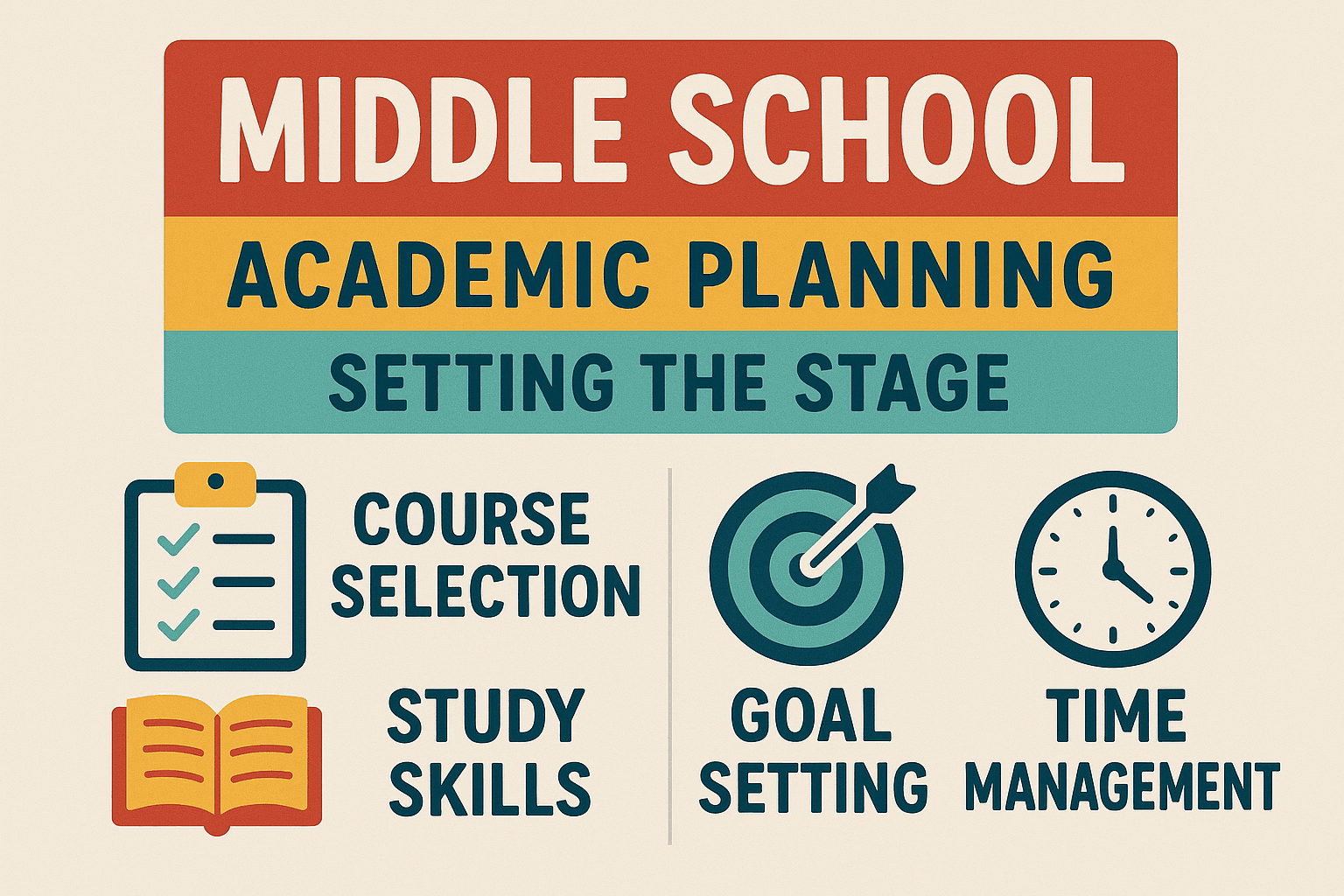
Middle School Academic Planning: Setting the Stage
Middle school academic planning is a critical step for parents aiming to set a strong foundation for their college-bound children. It involves proactive engagement in your child's education, understanding their interests and strengths, and beginning early preparation for high school and beyond. By setting clear academic goals, exploring enrichment opportunities, and fostering a growth mindset, parents can significantly influence their child’s future academic success.
Why Middle School Matters
Middle school serves as a pivotal time in a child’s academic and personal development. It is during these formative years that students begin to develop the study habits, interests, and self-discipline that will carry them through high school and into college.
- Transition to Independence: Students learn to manage their time and responsibilities more independently.
- Exploration of Interests: It's a time for students to explore and identify their academic and extracurricular interests.
- Academic Foundation: Middle school grades and experiences can influence high school placement, impacting college admissions down the line.
The Role of Parents
As a parent, your involvement is crucial. Research shows that parental engagement in middle school is strongly linked to higher academic achievement. Your role includes:
- Providing support and resources
- Encouraging exploration and curiosity
- Setting expectations and helping with goal setting
Setting Academic Goals
Understanding Your Child
Start by understanding your child’s strengths, weaknesses, and interests. This understanding will guide the setting of realistic and motivating academic goals.
- Conduct Assessments: Consider formal or informal assessments to identify strengths and areas for improvement.
- Encourage Exploration: Support your child in exploring various subjects and extracurricular activities to discover their passions.
Goal Setting
With a clear understanding of your child’s academic landscape, set short-term and long-term goals.
- Short-term Goals: These might include improving grades in a specific subject or developing a new study habit.
- Long-term Goals: These could involve aspirations for high school, such as taking honors classes or aiming for leadership positions in clubs.
Academic Enrichment Opportunities
Enrichment opportunities outside the classroom can play a significant role in your child’s development.
- Summer Programs: Look for summer camps or classes that align with your child’s interests.
- Online Courses: Utilize online platforms for advanced subjects or areas of interest not covered in school.
- Community Service: Encourage participation in community service, which fosters empathy and social responsibility.
The Importance of Extracurricular Activities
Extracurricular activities are not just hobbies; they are a critical component of personal and academic development. They help students:
- Develop leadership and teamwork skills
- Explore interests deeply
- Stand out in the college admissions process
Fostering a Growth Mindset
A growth mindset, the belief that abilities can be developed through dedication and hard work, is essential for academic and personal success.
- Encourage Challenges: Teach your child to see challenges as opportunities for growth.
- Praise Effort: Focus on the effort put into a task, not just the outcome.
- Model Learning: Show your own commitment to learning and improvement.
Navigating the Transition to High School
The transition to high school is a significant step in your child’s academic journey. Preparation should begin in middle school.
- High School Course Planning: Understand the high school curriculum and how middle school choices affect high school options.
- Standardized Testing: Familiarize yourself and your child with any entrance exams or standardized tests required for high school or specialized programs.
- Social and Emotional Preparation: Discuss the changes and challenges your child might face and strategize ways to manage them.
Practical Tips for Parents
Here are actionable steps you can take to support your child’s middle school academic planning:
- Attend Parent-Teacher Conferences: Stay informed about your child’s progress and how you can support their learning at home.
- Create a Study-Friendly Environment: Ensure your child has a quiet, organized space for homework and studying.
- Use Technology Wisely: Leverage educational apps and websites to reinforce learning.
- Encourage Reading: Foster a love for reading, which supports vocabulary development and comprehension skills across all subjects.
- Stay Organized: Help your child develop organizational skills, such as using a planner or digital tools to keep track of assignments and deadlines.
Conclusion
Middle school is a crucial time for setting the stage for future academic success. By understanding your child’s needs, setting clear goals, providing enrichment opportunities, fostering a growth mindset, and preparing for the high school transition, you can play a pivotal role in your child’s academic journey. Remember, the goal is not just academic excellence, but the development of a well-rounded, curious, and resilient individual ready to face the challenges of high school and beyond.
Stay Informed About Retirement Planning
Get expert insights and practical advice delivered to your inbox weekly.
Join 50,000+ seniors making informed retirement decisions.