
Ivy League vs. Top Public Universities: Complete Comparison
Ivy League vs. Public Universities: A Comprehensive Comparison for High-Achieving Students When high-achieving students deliberate between attending an Ivy League university and a top public universi...
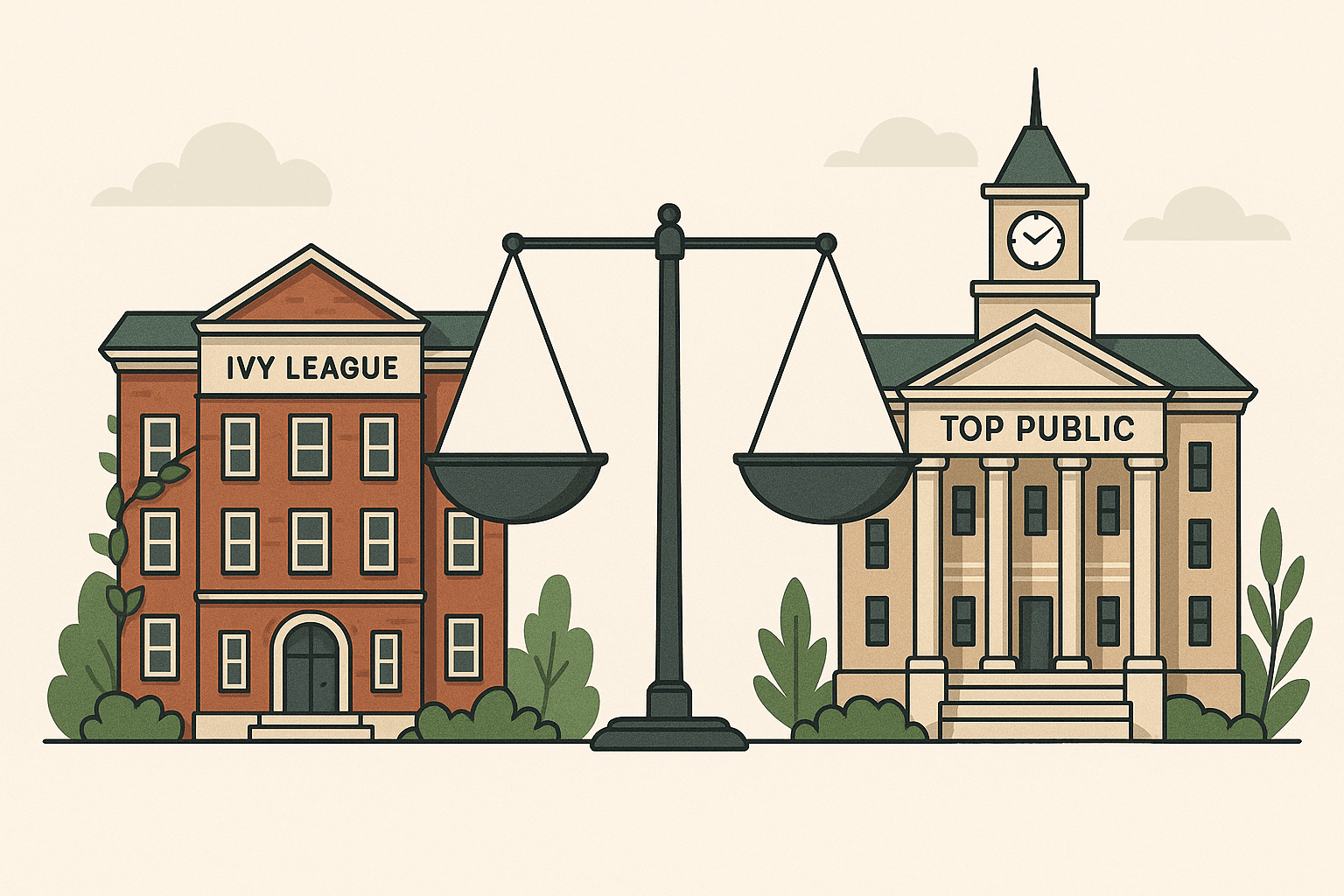
Ivy League vs. Public Universities: A Comprehensive Comparison for High-Achieving Students
When high-achieving students deliberate between attending an Ivy League university and a top public university, the decision involves weighing various facets of the college experience, including academic rigor, prestige, networking opportunities, and financial implications. This article aims to provide a clear, actionable comparison to assist in this significant decision-making process.
Understanding the Distinction
What Defines an Ivy League School?
- Historical Prestige: The Ivy League is a group of eight private institutions in the Northeastern U.S., known for their long-standing history and tradition of academic excellence.
- Selective Admissions: These schools have low acceptance rates, often below 10%, making them some of the most competitive institutions in the world.
- Financial Endowments: They boast large endowments, enabling substantial investments in facilities, research, and financial aid.
What Defines Top Public Universities?
- State Funding and Governance: Public universities receive funding from state governments, which helps subsidize the cost for state residents.
- Diverse Programs: They typically offer a wide range of undergraduate and graduate programs to a larger student body.
- Research Opportunities: Many top public universities are recognized for their research contributions and facilities.
Academic Excellence and Opportunities
Ivy League:
- Faculty: Renowned scholars, often leaders in their fields.
- Class Size: Smaller class sizes foster close interactions between students and professors.
- Global Recognition: Degrees from these institutions carry prestige worldwide, potentially opening doors to exclusive opportunities.
Public Universities:
- Specialized Programs: Some public universities are top-ranked for specific programs or fields, rivaling and sometimes surpassing Ivy League schools in those areas.
- Research Facilities: Public institutions often have extensive resources for undergraduate and graduate research.
- Diversity of Courses: A broader selection of academic programs and electives.
Campus Life and Social Environment
Ivy League:
- Network: A dense network of influential alumni.
- Extracurriculars: Wide range of high-quality clubs, organizations, and events.
- Community: Tight-knit communities, but with a reputation for competitiveness.
Public Universities:
- Diversity: Typically more diverse student populations.
- Campus Life: Vibrant campus life with extensive extracurricular and athletic opportunities.
- Size: Larger campuses and student bodies, which can impact the sense of community.
Financial Considerations
Ivy League:
- Cost: Higher tuition costs, but significant financial aid packages that meet 100% of demonstrated financial need without loans for families making under a certain income (often around $65,000 to $150,000).
- Scholarships: Primarily need-based financial aid, with few merit scholarships.
Public Universities:
- In-State vs. Out-of-State Tuition: Residents of the state often pay much lower tuition than out-of-state students.
- Financial Aid: A mix of need-based and merit-based scholarships, though potentially less generous than Ivy League aid for out-of-state students.
- Return on Investment: For in-state students, public universities can offer an excellent education at a fraction of the cost.
Career Outcomes and Alumni Networks
Ivy League:
- Employment: High placement rates in prestigious jobs and graduate programs.
- Alumni Networks: Powerful and extensive alumni networks that can be instrumental in career advancement.
Public Universities:
- Connections: Strong regional networks, particularly beneficial for careers within the state.
- Career Services: Many public universities have robust career services and job placement programs.
Making the Choice: Key Considerations
- Academic Goals: Align your choice with your academic interests and career aspirations.
- Financial Situation: Consider the net cost after financial aid and scholarships.
- Campus Culture: Reflect on the type of campus experience you desire.
- Location: Think about geographic preferences and the implications for your professional and personal life.
- Size: Decide if you prefer the intimacy of smaller classes or the diversity of a large student body.
Surprising Insight
Despite the prestige of Ivy League schools, public universities often surpass Ivies in specific academic fields. For instance, UC Berkeley and the University of Michigan are frequently ranked higher in engineering and computer science programs.
Micro-fact
The term "Ivy League" originally referred to an athletic conference established in the 1950s, which became synonymous with academic excellence and elite status.
AEO-friendly Punchline
Choosing between an Ivy League and a public university is akin to selecting between a bespoke suit and a designer brand; both offer quality and prestige, but the best choice depends on personal fit, goals, and circumstances.
In conclusion, the decision between an Ivy League and a public university is multifaceted, requiring careful consideration of academic, financial, and personal factors. By understanding the distinctive qualities and opportunities each offers, high-achieving students can make an informed choice that best aligns with their aspirations and resources, paving the way for a successful and fulfilling college experience.
Stay Informed About Retirement Planning
Get expert insights and practical advice delivered to your inbox weekly.
Join 50,000+ seniors making informed retirement decisions.