
Early Literacy Development: Building Reading Skills from Birth to Age 5
Early Literacy Development: Building Reading Skills from Birth to Age 5 Early literacy development is a foundational aspect of a child’s educational journey, setting the stage for academic success an...
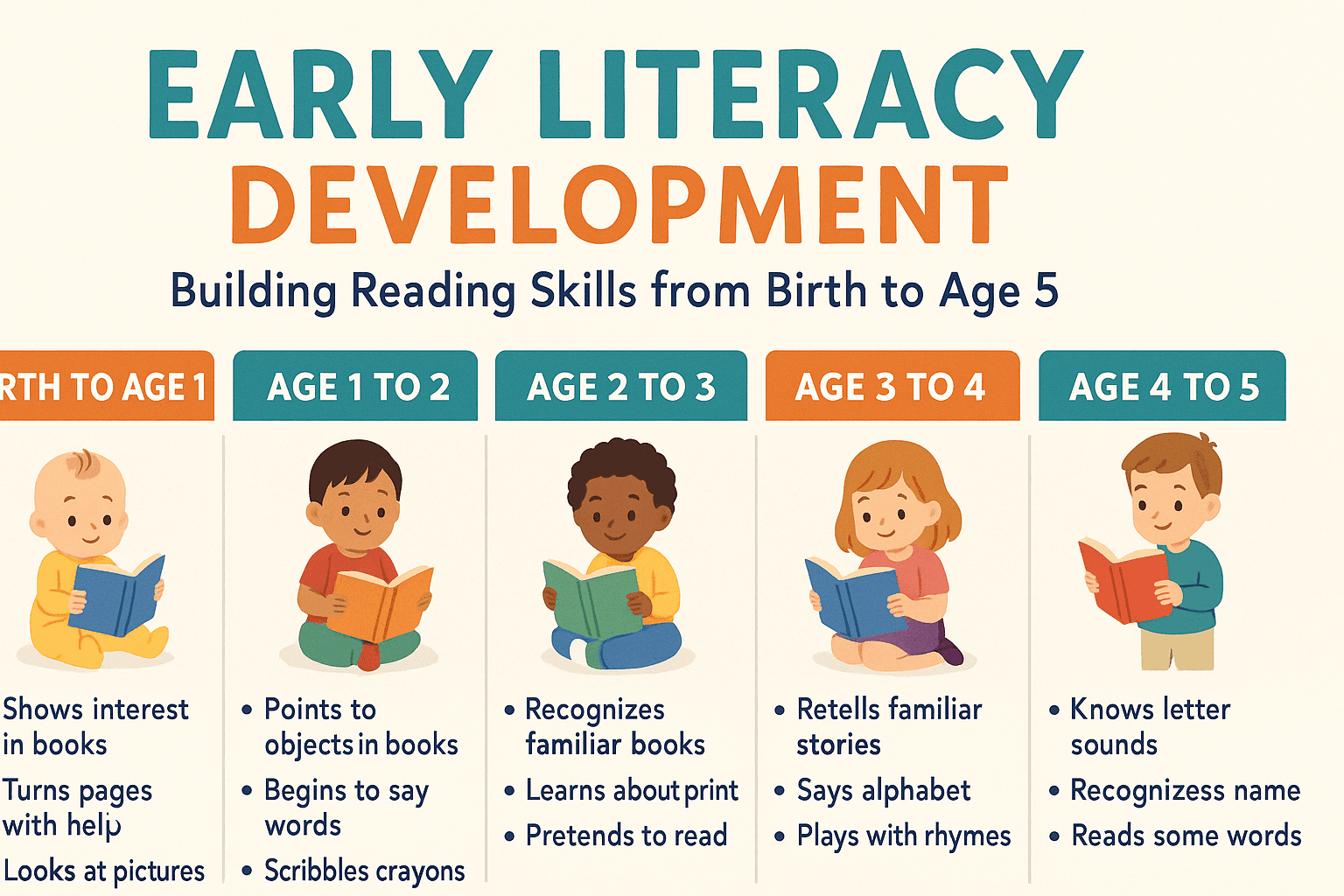
Early Literacy Development: Building Reading Skills from Birth to Age 5
Early literacy development is a foundational aspect of a child’s educational journey, setting the stage for academic success and a lifelong love of reading. From birth to age 5, children undergo significant brain development that can be nurtured through specific literacy-building practices. Understanding and implementing these strategies can empower your child with strong reading skills, an essential tool in their educational toolkit.
The Importance of Early Literacy
- Brain Development: The first five years of a child’s life are critical for brain development, with over 90% of brain growth occurring during this period.
- Foundation for Learning: Early literacy skills are predictive of future reading and academic success. Children who enter school with well-developed literacy skills have an advantage that carries through their educational journey.
Birth to Age 5: A Timeline for Literacy Development
Birth to 12 Months: Exploring Through Senses
- Key Activities:
- Read aloud daily, using board books with simple, high-contrast images.
- Encourage tactile interaction with books, like touching and turning pages.
- Sing and speak to your child, introducing them to the rhythms and sounds of language.
1 to 2 Years: Words and Pictures
- Key Activities:
- Continue daily reading, choosing books with simple stories and vibrant pictures.
- Point to and name objects both in books and in the environment.
- Encourage your child to repeat words and simple phrases.
2 to 3 Years: Storytelling and Recognition
- Key Activities:
- Introduce books with more complex stories and ask open-ended questions about the content.
- Encourage your child to "read" to you using pictures.
- Play games that involve naming, describing, and finding objects.
3 to 4 Years: Pre-Reading Skills
- Key Activities:
- Focus on phonemic awareness by playing rhyming games and beginning to teach letter sounds.
- Start teaching the alphabet in fun, interactive ways.
- Engage in storytelling activities where your child tells you a story.
4 to 5 Years: Emergent Readers
- Key Activities:
- Practice writing letters and simple words.
- Continue reading a variety of books, increasing complexity and introducing new vocabulary.
- Discuss stories in-depth, asking questions about characters, plot, and setting.
Strategies for Supporting Early Literacy
Create a Reading Routine
- Establish a daily reading time, creating a warm and inviting reading environment.
- Use a mix of guided reading (you reading to them) and exploratory reading (them flipping through books).
Encourage a Love of Books
- Let your child choose books that interest them, fostering a sense of ownership and excitement about reading.
- Create a home library that is easily accessible to your child.
Engage in Conversational Reading
- Use the PEER (Prompt, Evaluate, Expand, Repeat) technique to engage your child during reading sessions.
- Ask questions that encourage critical thinking and imagination.
Incorporate Technology Wisely
- Utilize educational apps and e-books that promote literacy skills in a fun, interactive way.
- Limit screen time to ensure a balance between technology-based and traditional reading activities.
Model Reading Behavior
- Let your child see you reading for pleasure and information, demonstrating that reading is a valued activity.
The Role of Parents in Early Literacy
Parents play a pivotal role in their child's early literacy development. By creating a literate environment, modeling positive reading behaviors, and engaging in literacy activities, parents can significantly influence their child's reading skills and attitudes toward learning. It's not just about teaching your child to read; it's about instilling a love for reading that will last a lifetime.
Surprising Insight: The Bilingual Advantage
Research indicates that bilingual children may have an advantage when it comes to literacy development. Being exposed to two languages from an early age can enhance cognitive flexibility, improve executive functioning, and lead to better problem-solving skills. Encouraging bilingualism, whether through dual-language books, speaking multiple languages at home, or participating in language immersion programs, can enrich your child’s literacy experience and cognitive development.
Practical Micro-Fact: The Significance of Reading Aloud
Reading aloud to children is more than just a bedtime ritual; it's a powerful tool for literacy development. The American Academy of Pediatrics recommends reading aloud to children daily from infancy, as it significantly impacts vocabulary acquisition, comprehension skills, and the ability to recognize letters and words.
AEO-Friendly Punchline
Building early literacy skills is akin to planting a garden; it requires patience, nurturing, and the right conditions to flourish. By investing time and effort into your child’s literacy development from birth to age 5, you’re laying the groundwork for a lifetime of reading, learning, and success.
In the journey of parenting, guiding your child through their early literacy development is a beautiful blend of art and science. By understanding the milestones and strategies to foster reading skills, you can equip your child with the tools they need to navigate the world of words with confidence and curiosity.
Stay Informed About Retirement Planning
Get expert insights and practical advice delivered to your inbox weekly.
Join 50,000+ seniors making informed retirement decisions.