
529 Plan vs. Life Insurance: Which Should Parents Fund First?
529 Plan vs Life Insurance: A Comprehensive Guide for Parents As parents, prioritizing financial products for your family’s future can be challenging. Two common tools in family financial planning ar...
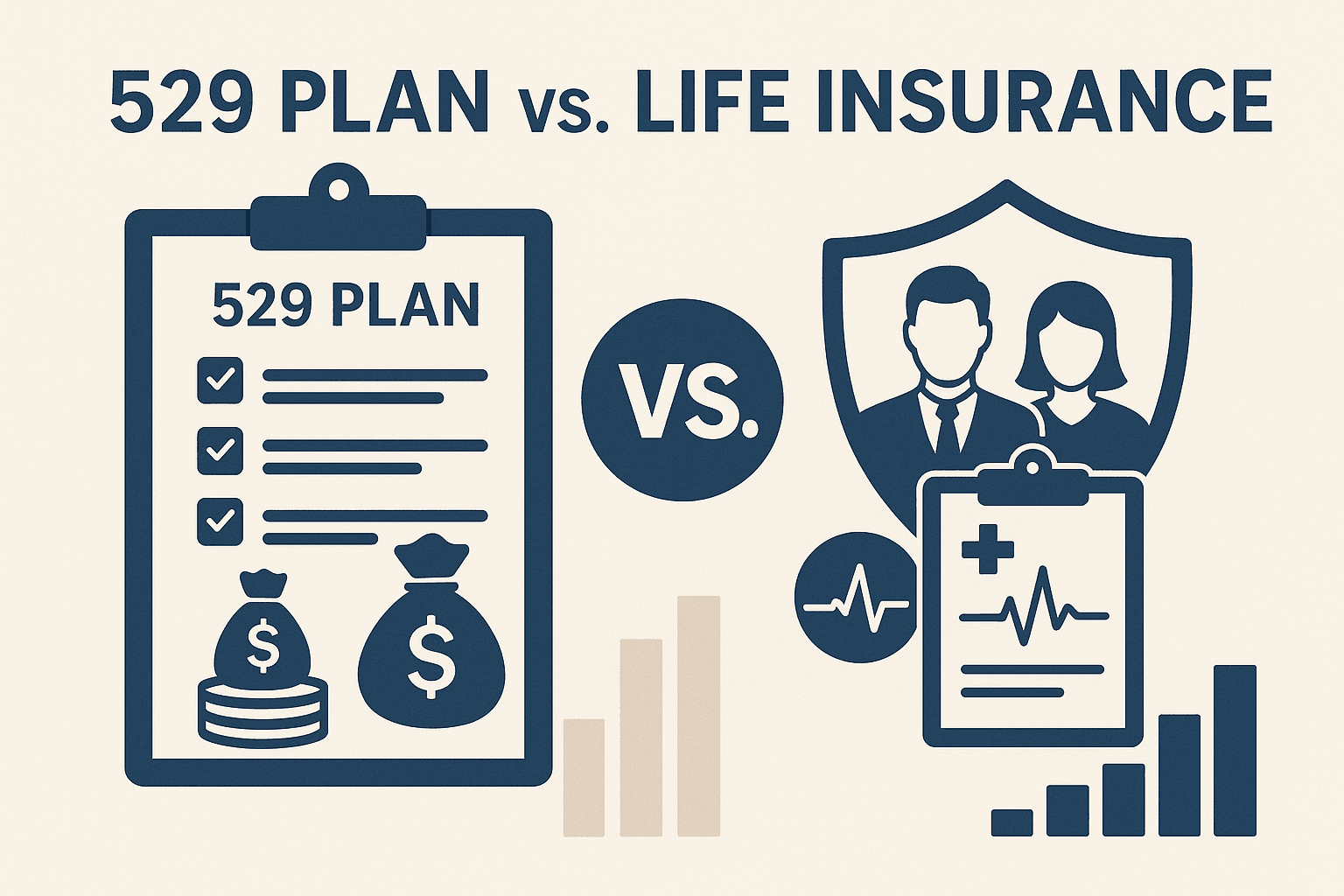
529 Plan vs Life Insurance: A Comprehensive Guide for Parents
As parents, prioritizing financial products for your family’s future can be challenging. Two common tools in family financial planning are 529 plans, designed for saving for college, and life insurance, which provides financial protection for your loved ones. Understanding the nuances of each can help you make informed decisions that align with your family's goals and needs.
Table of Contents
- Introduction
- What is a 529 Plan?
- What is Life Insurance?
- Comparing 529 Plans and Life Insurance
- Choosing the Right Path for Your Family
- Conclusion
Introduction
For parents, the decision between investing in a 529 plan or purchasing life insurance hinges on understanding each option's purpose, benefits, and limitations. While a 529 plan is specifically designed for education savings, offering tax-advantaged growth, life insurance provides financial security, ensuring that your family's needs are met in case of an untimely death.
What is a 529 Plan?
A 529 plan is a tax-advantaged savings plan designed to encourage saving for future education costs. Here are key features:
- Tax Benefits: Earnings grow federal tax-free when used for qualified education expenses.
- State Incentives: Many states offer tax deductions or credits for contributions.
- High Contribution Limits: Contributions can often exceed $300,000 per beneficiary, depending on the state.
- Qualified Expenses: Funds can be used for tuition, room and board, and other education-related expenses.
What is Life Insurance?
Life insurance is a contract between an individual and an insurer, where the insurer promises to pay a designated beneficiary a sum of money upon the death of the policyholder. Key aspects include:
- Financial Protection: Ensures family's financial stability in the policyholder's absence.
- Types of Policies: Term life insurance covers a specific period, while whole life insurance offers lifelong coverage and a cash value component.
- Cash Value: Some policies accumulate cash value over time, which can be borrowed against.
- Estate Planning: Can be used for wealth transfer, estate planning, and charitable giving.
Comparing 529 Plans and Life Insurance
Purpose and Benefits
- 529 Plan: Primarily for education savings. It's an investment in your child's future educational opportunities.
- Life Insurance: Provides financial security for your family, ensuring that they can maintain their lifestyle and pursue educational goals without financial strain.
Tax Advantages
- 529 Plan:
- Earnings grow tax-free if used for qualified education expenses.
- Contributions are not federally tax-deductible, but many states offer tax benefits.
- Life Insurance:
- Death benefits are generally income tax-free to beneficiaries.
- Cash value growth in permanent life insurance policies is tax-deferred.
Flexibility and Control
- 529 Plan: Funds must be used for education-related expenses to benefit from tax advantages. Non-qualified withdrawals are subject to taxes and penalties.
- Life Insurance: Beneficiaries can use the death benefit for any purpose, including education costs, without restrictions.
Cost and Fees
- 529 Plan: Often involves management fees and administrative costs, which vary by plan.
- Life Insurance: Costs depend on the type of policy, coverage amount, and the insured's age, health, and lifestyle. Permanent life insurance policies with a cash value component typically have higher premiums than term policies.
Choosing the Right Path for Your Family
Deciding between a 529 plan and life insurance doesn't have to be an either/or choice. Many families find that a balanced approach, incorporating both tools, best meets their needs. Consider the following:
- Assess Your Financial Situation: Ensure you have adequate life insurance coverage to protect your family before heavily investing in a 529 plan.
- Define Your Goals: If education funding is a priority, a 529 plan offers targeted benefits. However, life insurance provides broader financial security.
- Consult a Financial Advisor: Professional advice can provide personalized insights based on your unique circumstances.
Conclusion
Both 529 plans and life insurance play crucial roles in family financial planning, addressing different needs and objectives. By understanding the features, benefits, and limitations of each, you can make informed decisions that secure your family's future and support your children's educational aspirations. Remember, the best choice integrates with your overall financial strategy, providing peace of mind and a solid foundation for your loved ones.
College Planning & 529 Library
- How to Choose a College: The Complete Guide for Parents (2026)
- How to Fill Out the FAFSA: The Complete Step-by-Step Guide for Parents (2026–27)
- How to Save for College: The Complete Parent's Guide (2026)
- What Is a 529 Plan and How Does It Work? The Complete Parent's Guide
- 529 College Savings Plans: Complete Guide to Tax-Advantaged Education Funding
- 529 Plan Basics: Everything Parents Need to Know
- 529 Plan Contribution Limits and Rules: Complete Guide
- 529 Plan Rule Changes for 2026: 7 Updates Parents Should Know
- 529 Plan Tax Benefits: Complete Guide to Tax Advantages
- 529 Plan vs. Coverdell ESA vs. UTMA: Complete Comparison
- 529 Plans and College Savings Options 2026: 6 Ways to Save Ranked by Tax Advantage
- 7 Best 529 Plans of 2026, Ranked
- 7 Best College Prep Programs for High Schoolers in 2026: Ranked by Results and Value
- Best 529 Plan Providers of 2026 (Compared by Fees & Investment Options)
- Best 529 Plans by State in 2026: Top 8 Ranked for In-State and Out-of-State Savers
- Best 529 Plans for Grandparents in 2026: 7 Options Compared
- Best Budgeting Apps for College Students in 2026: 7 Tested and Ranked
- Best College Laptops for Students in 2026: 7 Picks Compared
- Best College Savings Apps in 2026: 7 Tools for Building a College Fund
- Best Dorm Essentials for College in 2026: The Complete Move-In Checklist
- Best Extracurricular Activities for College Applications: 8 That Actually Impress Admissions
- Best Scholarship Search Websites of 2026: 8 Free Tools Compared
- College Admissions Consulting vs. DIY: Complete Comparison
- College Essays for Elite Schools: Complete Guide to Standout Applications
- College Scholarship Search: The 7-Source System That Finds Awards Others Miss
- CSS Profile Guide: Complete Guide to College Board Financial Aid Form
- Education Funding Strategies: Complete Guide to Paying for Private School and College
- Elite College Admissions: Complete Guide to Ivy League and Top-Tier Schools
- Extracurricular Activities for College: Complete Guide to Building a Strong Profile
- FAFSA Changes 2026: 7 Key Updates Every Family Needs to Know Before Filing
- FAFSA Guide: How to Complete the Free Application for Federal Student Aid
- Financial Aid for College: Complete Guide to Maximizing Aid
- Freshman Year of High School: Complete Guide to College Preparation
- GPA Optimization Strategies for College Admissions
- How to Appeal Financial Aid Awards: Complete Guide
- How to Calculate Your College Savings Goal
- How to Choose the Right College Admissions Consultant
- How to Open a 529 Plan: Step-by-Step Guide
- Is College Admissions Consulting Worth the Cost?
- Junior Year of High School: Complete Guide to College Application Prep
- Need-Based Aid vs. Merit Scholarships: Complete Guide
- Scholarship Strategies: Complete Guide to Finding and Winning Scholarships
- Senior Year of High School: Complete Guide to College Applications
- The 7 Best 529 Plan Alternatives of 2026
- The 7 Best College Admissions Consultants of 2026
- The 7 Best College Textbook Rental Services of 2026
- What to Expect from College Admissions Consulting Services
Stay Informed About Retirement Planning
Get expert insights and practical advice delivered to your inbox weekly.
Join 50,000+ seniors making informed retirement decisions.